Standards, Safety and Quality Committee

The ICS Standards Committee Terms of Reference; to...

  • Promote and improve the safe practice of intensive care.
  • Draw up evidence based standards and guidelines for intensive care.
  • Work with other organisations to produce standards for intensive care.
  • Publish and circulate the standards and guidelines to the appropriate bodies.
  • Work with organisations such as the NPSA to promote patient safety.
  • Review adverse events in critical care and put in place systems and measures to reduce their incidence.
  • Promote the provision of the highest quality of intensive care to critically ill patients.
  • Develop standards for the measurement of the quality of intensive care.
  • Provide a regular and timely review of published standards and guidelines in the light of new evidence (every two years).
  • Review and update the Standards Safety and Quality section of the Intensive Care Society website and to invite comments from members of the Society.

The National Tracheostomy Safety Project
A multi-disciplinary initiative trying to improve the management of routine and emergency care for patients with tracheostomies and laryngectomies. The project was prompted by local and national reviews of tracheostomy critical incidents in critical care and on hospital wards, working with the NPSA.

We identified recurrent themes which contributed to patient safety incidents occurring, and to their severity when an incident evolved. These included a basic lack of knowledge and competence, lack of essential bedside equipment, inadequate infrastructure and locations, and a lack of definitive guidance around what to do if an emergency occurred. Our working party started by developing emergency algorithms for managing tracheostomy emergencies based on the common, recurring themes we found on the incident reviews. We felt we needed to support these with some background information and canvassed as widely as we could from anaesthesia, critical care, ENT, Max Fax, emergency medicine, nursing, physiotherapy and speech therapy to try and develop multi-disciplinary resources that would be relevant for all. To this end we have put together a resource which has basic information, infrastructure and governance considerations and then the emergency work. We have created a ‘one stop shop’ resource which puts together all of the pieces of the jigsaw which exist around tracheostomy care.



We have engaged and collaborated with the Difficult Airway Society, Intensive Care Society, Royal College of Nursing, ENT UK, British Association of Oral and Maxillofacial Surgeons, Royal College of Anaesthetists, College of Emergency Medicine and the Chartered Society of Physiotherapy. The project is led by the UK Difficult Airway Society and forms part of their portfolio. We launched the project at the DAS ASM and have agreed to subject the algorithms and the resources to a 6 month period of feedback (until the end of May 2011), after which we intend to publish them in a suitable journal. The feedback will be collected through our working party, via the ICS, DAS and our own websites. The resources are all available at www.tracheostomy.org.uk and include the emergency algorithms, bed head signs (detailing essential bedside knowledge for an emergency), the resource document (hyperlinked to explanatory videos, animations and other useful sites and resources) and training videos showing routine and emergency tracheostomy management. We would be very interested to hear any feedback or comments that you might have on the project.

SSQ Committee Guideline Policy (2010)
The guideline production process.

Standards in preparation

New Standards and Guidance - draft version for comment only

Published Administration and Organisation Documents

Published Clinical Practice Documents

Published Guidance Documents

Published Patient Safety Documents

Other Published Documents

Links to Standards and Safety Related Organisations


Composition:

Chair - Dr Simon Baudouin
ICS Council Member - Dr Kevin Gunning (past chairman)
ICS Council Member - Dr Jane Harper
ICS Trainee member - Dr Annemarie Docherty
RCN Representative - Rachel Binks
BACCN Representative - Catherine Plowright
ICS Member - Dr Tony Thomas
ICNARC Representative - Ms Lucy Lloyd-Scott
Networks Representative - Dr Duncan Watson
ICS Member - Dr Carol Peden

Standards in preparation

Admission of perioperative patients to Critical Care Units – Prof M Mythen
Quality Markers in intensive Care - Dr J Harper
Sedation in Intensive Care - Dr M Manji and Dr J Willson

Back to top

New Standards and Guidance - draft version for comment only

Equipment Standards

Quality Indicators

If you have any comments on Standards for Equipment or Quality Indicators please send them to Anna Wong via anna@ics.ac.uk with attention Standards, Safety and Quality Committee in the subject area.


Back to top


Published Documents - available to download


Administration and Organisation

Levels of Critical Care for Adult Patients (revised 2009)
This document has been written to help apply the levels of care described in 'Comprehensive Critical Care'. The expanded classification has been agreed by the Department of Health through the Critical Care Advisory Group.

Standards for Consultant Staffing of Intensive Care Units (2007) - currently under review
Standards for consultant staffing for all patients receiving Level 2 or Level 3 Care

Standards for Nurse Staffing in Critical Care (2009)
Published by the BACCN in September 2009, revised in January 2010.

Guidelines for the Introduction of Outreach (2003)
These guidelines are the first issued by the Intensive Care Society on the subject of Outreach Services. The document is designed to act as a resource for those involved in developing such a service.

Framework for Financial Management in Intensive Care (2002)
Confused about finance? how does the system work? Herein lies the answer: Financial Framework details issues around the financing of a UK ICU - it may help you optimise the flow of resource in the direction of your own unit.

Guidelines for Fire Safety in the Intensive Care Unit (1998)
Provides general guidelines and highlights areas which warrant particular attention in the ICU and in the staff's response to fire.

Standards for Intensive Care Units (1997)
Standards for Intensive Care Units (Updated from 1997)

Back to top


Clinical Practice

Mental Capacity Act

Capnography Guidelines (2011)

Standards for Capnography in Critical Care (2009)

Standards and Recommendations for the Provision of Renal Replacement Therapy on Intensive Care Units in the United Kingdom (2009).
This guideline summarises the current options and best evidence available for the provision of renal replacement therapy in critically ill patients and outlines how it can be implemented in a safe and effective way

Standards for the Management of Patients After Cardiac Arrest (2008)
This is a comprehensive guide to the management of patients after cardiac arrest including the latest international guidelines and section for relatives and carers

Guidelines for Venous Thromboprophylaxis in Critical Care (2008)

British Consensus Guidelines on Intravenous Fluid Therapy for Adult Surgical Patients Giftasup (2008)- Core data from the Guideline has been challenged and the guidelines will be re-examined on this basis.

Standards for the Care of Adult Patients with a Temporary Tracheostomy (2008)
To be read in conjunction with the NPSA Tracheostomy Guidelines.

Guidelines for Adult Organ and Tissue Donation (2005)
The purpose of this manual is to assist intensive care medical and nursing staff to manage the events which take place when a patient becomes an organ donor and to provide a template for the creation of local guidelines.

Evaluation of Spinal Injuries Among Unconscious Victims of Blunt Polytrauma: A Management Guideline for Intensive Care (2005)
These guidelines provide recommendations for the investigation and management of patients with potential spinal injuries whose consciousness is impaired either as a result of the primary injury or because of the requirement for sedation to facilitate other critical care interventions..

Guidelines for Limitation of Treatment for Adults Requiring Intensive Care (2003)
Guidelines for withdrawal of treatment from critically ill patients.

The Process of Consent Within the Intensive Care Unit (2003)
Examines current guidelines on consent and the incompetent adult and considers the difficulties in applying these to the field of intensive care.

Sedation Guidelines (2007)
Guidelines for the correct management and aims of sedation.

Weaning Guidelines (2007)
This guideline is aimed to assist with the prolonged weaning cases.

Guidelines for Bereavement Care in Intensive Care Units (1998)
The aims of these guidelines are to raise awareness among medical, nursing staff and managers of the need to provide care for bereaved relatives.

Back to top


Guidance

Ultrasound in Anaesthesia and Intensive Care - A Guide to Training

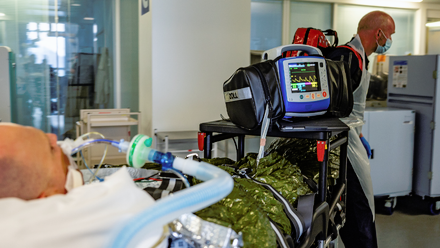
Guidelines for Transport of Critically Ill Adults 3rd Edition (2011)

Medication Concentrations in Critical Care Areas (2010)

Statement on the Use of Unlicensed Medicines, or Licensed Medicines for Unlicensed Purposes in Critically Ill Patients (2009)

Support for NHS Staff working in Exceptional Circumstances (2009)
Guidance for NHS employers and other relevant organisations

Investigation of Suspected Infection in Critically Ill Patients (2007)
This document has been developed by its authors to summarise best practice guidance for reducing infection risks and managing infections when they occur in critical care units. A number of the updated versions of its components will be added as they are published in the Journal of the Intensive Care Society

Point of Care Testing (POCT) in Critical Care (2004)
This document draws together the main points from the existing point of care testing guidelines for the benefit of critical care directors and staff who are already working with point of care devices or intending to purchase or manage them.

Donation After Circulatory Death (2010)

Back to top


Patient Safety

Standards for Critical Incident Reporting in Critical Care (2006)
These standards for critical incident management in critical care aim to focus on the specific needs of critical care while covering the wider NHS reporting and management systems promoted by the NPSA.

Back to top


Other

UKCPA: Detection, Prevention and Treatment of Delirium in Critically Ill Patients (2006)
This document provides useful guidance on the management of acute delirium states in critically ill patients

Evolution of Intensive Care in the UK (2003)
This document gives a brief history of the development of one of the newest hospital specialties.

Mental Capacity Act - Final


Back to top


Links to Standards and Safety Related Organisations

NPSA

ICU Delirium

Medicines and Healthcare Products Regulatory Agency (MHRA)

Back to top


Disclaimer

Neither the Intensive Care Society nor the authors accept any responsibility for any loss or damage arising from actions or decisions based on the information contained within these publications. Ultimate responsibility for the treatment of patients and interpretation of the published material lies with the medical practitioner. The opinions expressed are those of the authors and the inclusion of this publication of material relating to a particular product or method does not amount to an endorsement of its value, quality, or the claims made by its manufacturer.